
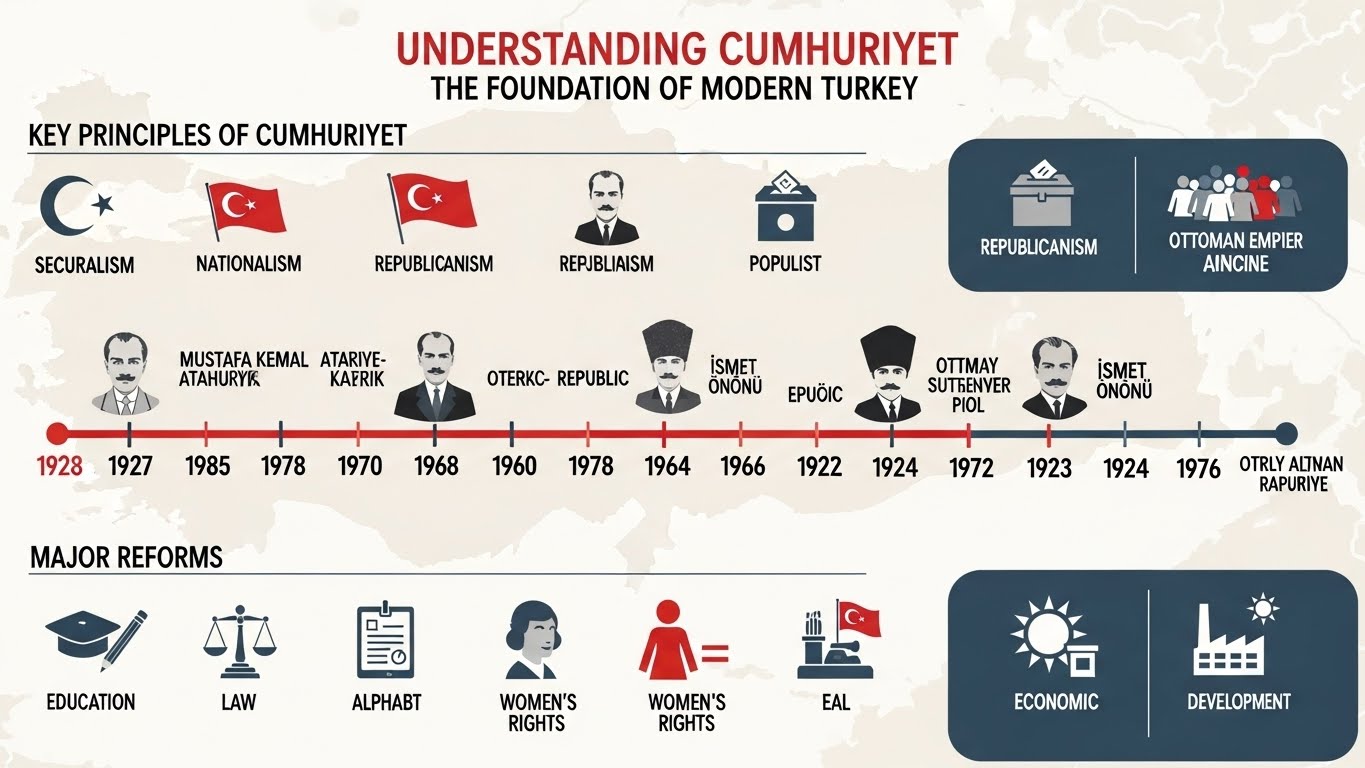

Cumhuriyet represents more than just a political framework; it embodies the spirit of a nation seeking to redefine itself. This term, which translates to “republic,” marks a pivotal moment in Turkish history when the Ottoman Empire gave way to modernity. Through its core values and principles, Cumhuriyet has shaped Turkey into what it is today—a vibrant blend of tradition and progress. Understanding this concept is essential for anyone interested in the evolution of not only Turkey but also its role on the global stage. Let’s delve deeper into how Cumhuriyet emerged from the shadows of an ancient empire and set forth on a path toward independence and identity.
History of the Ottoman Empire and the Rise of Mustafa Kemal Atatürk
The Ottoman Empire, a powerful realm from the 14th to early 20th centuries, marked an era of cultural and political influence. Spanning three continents, it was known for its vast territories and diverse populations. However, by the late 19th century, internal strife and external pressures began to erode its stability.
Amidst this turmoil emerged Mustafa Kemal Atatürk. Born in 1881 in Salonika, he was initially trained as a military officer. His leadership during World War I showcased his strategic brilliance.
As the empire’s decline became evident post-war, Atatürk championed Turkish nationalism. He played a pivotal role in resisting foreign occupation during the Turkish War of Independence. This struggle not only solidified his status but also paved the way for monumental changes ahead. The vision he held would soon reshape Turkey into a modern republic with unprecedented reforms that echoed throughout history.
The Founding of the Republic of Turkey
The founding of the Republic of Turkey marks a pivotal moment in history. In 1923, after years of upheaval and conflict, Mustafa Kemal Atatürk emerged as a visionary leader. He sought to create a new nation from the ashes of the Ottoman Empire.
Atatürk proclaimed the republic on October 29, establishing it as a secular state with democratic ideals. This radical shift aimed at modernizing Turkish society. The old imperial structures were dismantled to pave the way for progress.
New laws replaced centuries-old traditions, promoting education and women’s rights. Citizens were encouraged to embrace nationalism while fostering unity among diverse ethnic groups within Turkey’s borders.
The move towards democracy was ambitious but essential for national identity. It created an environment where innovation could thrive and cultural expression flourished—an endeavor that would shape Turkey’s future for generations to come.
Key Principles and Reforms of Cumhuriyet
The key principles of Cumhuriyet, or the Republic, shaped modern Turkey’s identity. Secularism became a cornerstone, separating religious influence from government affairs. This shift aimed to promote equality and rational governance.
Education reform was another vital aspect. The establishment of free public schools ensured literacy and enlightenment for all citizens. Emphasis on science and critical thinking transformed societal norms.
Gender equality received significant attention as well. Women gained the right to vote in 1934, marking a progressive leap for gender roles in Turkish society.
Atatürk’s reforms extended into cultural realms too. The adoption of the Latin alphabet replaced Arabic script, making reading more accessible to everyday people.
All these changes fostered a sense of nationalism rooted in modernity while respecting traditional values. Each reform played a crucial role in forging an inclusive national identity that resonates today across Turkey.
Impact and Legacy of Cumhuriyet on Modern Turkey
Cumhuriyet transformed the social, political, and cultural landscape of Turkey. It established a secular state where religion no longer dictated governance. This shift allowed diverse beliefs to flourish.
Education underwent significant reform under Cumhuriyet. Literacy rates soared as modern schools replaced traditional institutions. The focus on science and technology paved the way for an informed citizenry.
Women gained unprecedented rights through progressive laws. Their participation in politics and public life became integral to society, shaping future generations.
The emphasis on nationalism fostered a shared identity among citizens. Turks from various backgrounds united under the banner of a modern republic.
Culturally, Cumhuriyet encouraged artistic expression free from censorship. Writers, musicians, and artists explored new ideas reflective of contemporary issues.
These changes laid foundations that continue influencing Turkish society today, creating dialogues around democracy and individual freedoms that resonate deeply within its fabric.
Challenges Faced by Cumhuriyet Today
Cumhuriyet faces various challenges in contemporary Turkey. One significant issue is the tension between secularism and rising religious conservatism. This ongoing struggle influences political discourse, often polarizing society.
Economic difficulties add another layer of complexity. Inflation and unemployment rates create discontent among citizens who feel disconnected from the ideals of Cumhuriyet. The promise of a modern, prosperous nation seems increasingly elusive for many.
Additionally, freedom of expression encounters obstacles. Journalists and activists face censorship and intimidation when voicing dissenting opinions. This stifles public debate essential for democracy.
The Kurdish question remains unresolved as well, highlighting ethnic tensions that challenge national unity envisioned by Cumhuriyet’s founders. These factors contribute to a complex landscape where the original principles are tested daily amidst evolving societal dynamics.
Conclusion: Reflection on the Significance of Cumhuriyet in Turkish History
Cumhuriyet represents a pivotal moment in Turkish history, marking the transition from centuries of imperial rule to a modern republic. Its establishment in 1923 under Mustafa Kemal Atatürk’s leadership brought about fundamental changes that reshaped the nation’s identity.
The principles of Cumhuriyet laid the groundwork for a secular state and promoted equality among citizens. The reforms initiated during this period not only transformed education, law, and women’s rights but also encouraged cultural revival. These shifts helped forge an independent national consciousness rooted in citizenship rather than ethnicity.
The legacy of Cumhuriyet continues to influence Turkey today. It serves as a reminder of the importance of democratic values and civic engagement. However, its core tenets face ongoing challenges amid political dynamics and societal shifts.
Reflecting on Cumhuriyet prompts us to consider how far Turkey has come since then while acknowledging the journey still ahead. This historical foundation remains vital for navigating contemporary issues within society, reinforcing its significance as both a source of pride and an enduring challenge for future generations.
