
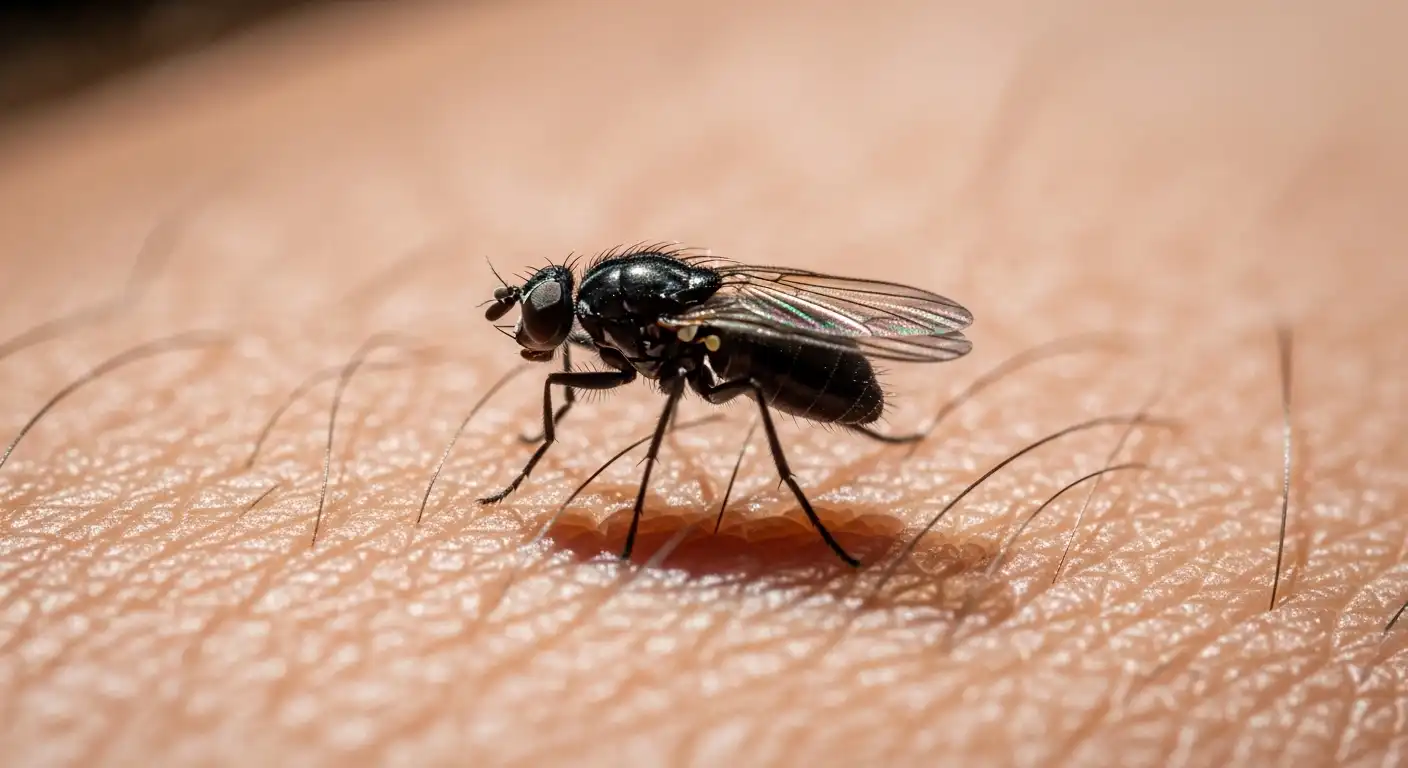

You’re sitting on your porch, enjoying a quiet sunset, when you feel a sharp, needle-like prick on your ankle. You slap at it, but there’s nothing there—just a tiny dark speck vanishing into the air. Within minutes, that spot starts to burn. It’s not the massive, puffy welt of a mosquito, but it’s arguably more irritating. You start to wonder: does a gnat bite, or are you just dealing with some strange skin reaction?
The frustration of being eaten alive by something you can barely see is enough to drive anyone indoors. You want to know what’s attacking you, why it hurts so much more than it should for such a small creature, and how to make the itching stop before you scratch your skin raw. This guide breaks down exactly which gnats are the culprits and how to reclaim your backyard.
What is a Gnat Bite?
In plain English, a gnat bite is a puncture in your skin made by specific types of tiny flies. While we use the word “gnat” as a catch-all term for any small, annoying fly, not all gnats have the mouthparts to bite humans. The gnats that do bite are usually “biting midges” (often called “no-see-ums”) or “black flies.” Unlike mosquitoes, which use a delicate, needle-like proboscis to “sip” your blood, biting gnats are much more aggressive. They have tiny, saw-like mandibles that literally cut into your skin to create a small pool of blood, which they then lap up.
This “cut and lap” method is why a gnat bite often feels like a sharp sting or a burn immediately. They also inject saliva containing anticoagulants to keep your blood flowing. Your body’s immune response to this saliva is what causes the redness, swelling, and that relentless, deep-seated itch.
Does a Gnat Bite? A Real-World Scenario
Imagine you are gardening on a humid Saturday morning. You notice a “cloud” of tiny dark specks hovering near your face. You wave them away, thinking they are just fruit flies or harmless fungus gnats from your mulch.
An hour later, you come inside and notice a dozen tiny red dots around your hairline and ears. They don’t look like much at first—just small, flat red points. However, by evening, those points have turned into hard, itchy bumps. Some might even have a tiny speck of dried blood in the center.
This is the classic “No-See-Um” attack. Because they are so small (often less than 3mm), they can fly through standard window screens. You might be getting bitten inside your own home without ever seeing a single insect. This scenario confirms that while the gnats in your houseplants (fungus gnats) are harmless to you, their biting cousins are masters of the sneak attack.
What Does HMU Mean in Text? The Ultimate Guide for 2026
How to Treat a Gnat Bite: Step-by-Step
If you’ve already been bitten, the goal is to neutralize the saliva and prevent a secondary infection from scratching. Follow these steps for the fastest relief:
-
Wash the Area Immediately: Use cool water and mild antibacterial soap. This removes any lingering insect saliva and bacteria from the surface of your skin.
-
Disinfect the “Cut”: Since gnats tear the skin, the wound is more open than a mosquito bite. Dab the spot with a cotton ball soaked in rubbing alcohol or witch hazel to sanitize the site.
-
Apply a Cold Compress: Use an ice pack or a cold cloth for 10 minutes. This constricts the blood vessels, which slows the spread of the irritating saliva and numbs the itch.
-
Use an Anti-Itch Cream: Apply a thin layer of hydrocortisone cream or a paste made of baking soda and a few drops of water. This helps bridge the gap until your body stops the inflammatory response.
-
Avoid Scratching: This is the hardest part. If you break the skin with your fingernails, you risk a staph infection or permanent scarring. Cover the bite with a small adhesive bandage if you find yourself scratching subconsciously.
Common Mistakes People Make
Most people treat all small flies the same, which leads to wasted money and continued itching. Here are the biggest blunders:
-
Treating your house for the wrong pest: If you have tiny flies in your kitchen, you likely have fruit flies (which don’t bite). If you spray your kitchen but the “gnats” biting you are coming from the swampy area in your backyard, you haven’t solved the problem.
-
Over-relying on “Natural” candles: Citronella candles have a very limited radius. If there is even a slight breeze, the “no-see-ums” will simply fly around the scent to get to you.
-
Using standard window screens: Biting midges are small enough to fit through the mesh of a standard screen. If you are getting bitten indoors, your screens are likely the “mistake.” You need “20×20” ultra-fine mesh to keep them out.
-
Scratching “just a little”: Because gnat bites are actually small lacerations, scratching them causes significantly more tissue damage than scratching a mosquito bite.
Gnat Bites vs. Mosquito Bites: How to Tell
| Feature | Gnat (Biting Midge/Black Fly) | Mosquito |
| Bite Sensation | Immediate sharp sting or burn | Often unfelt until later |
| Bite Appearance | Tiny red dot or small, hard red bump | Puffy, soft white/pink welt |
| Bite Pattern | Often in clusters or “lines” | Usually random and scattered |
| Swelling | Can be intensely swollen and hard | Generally soft and subsides quickly |
| Healing Time | 3 to 7 days | 2 to 4 days |
Pro Tips for Gnat Prevention
If you want to stop asking “does a gnat bite” and start enjoying the outdoors again, you need a multi-layered defense.
-
The Fan Trick: Gnats are incredibly weak fliers. A simple oscillating fan on your patio creates enough wind turbulence to make it impossible for them to land on you.
-
Time Your Outings: Biting gnats are most active at dawn and dusk when the wind is low and humidity is high. If you can move your outdoor activities to mid-day, you’ll avoid the peak feeding window.
-
Wear Darker Colors? No: Unlike some pests, many biting flies are attracted to dark, moving objects. Wearing light-colored, long-sleeved clothing can make you a less appealing target.
-
DEET and Picaridin: While “natural” oils like peppermint can help briefly, if you are in a high-infestation area, use a repellent containing 20% Picaridin. It is highly effective against midges and doesn’t have the greasy feel of DEET.
Frequently Asked Questions
Can gnat bites make you sick?
In North America, gnat bites are generally not known for spreading diseases to humans, unlike mosquitoes or ticks. However, they can cause “sweet itch” or severe allergic reactions in some individuals.
Why do gnats bite some people and not others?
Gnats are attracted to the carbon dioxide you exhale, your body heat, and certain components in your sweat like lactic acid. Some people naturally emit more of these “attractants” than others.
Do gnats bite at night?
Most biting gnats are “crepuscular,” meaning they prefer the low light of twilight. However, if you have lights on indoors and a window open, they will be drawn to the light and may bite you well into the evening.
How long do gnat bites last?
A typical gnat bite lasts between three to seven days. If the bite is still hot, spreading, or oozing after a week, it may be infected, and you should see a doctor.
Will vinegar kill biting gnats?
Vinegar is great for trapping fruit flies, but it does very little for biting gnats. Biting gnats want blood, not fermenting sugar. To kill them, you need an insecticide labeled specifically for “biting flies.”
Final Takeaway
So, does a gnat bite? The answer is a frustrating “yes,” provided it’s the right (or wrong) species. While “gnat” is a broad term, the ones that leave you itchy and miserable are typically biting midges or black flies that use saw-like teeth to feed.
The best thing you can do right now is check your window screens and outdoor standing water. By eliminating their breeding grounds and reinforcing your physical barriers, you can stop the cycle of bites.
