
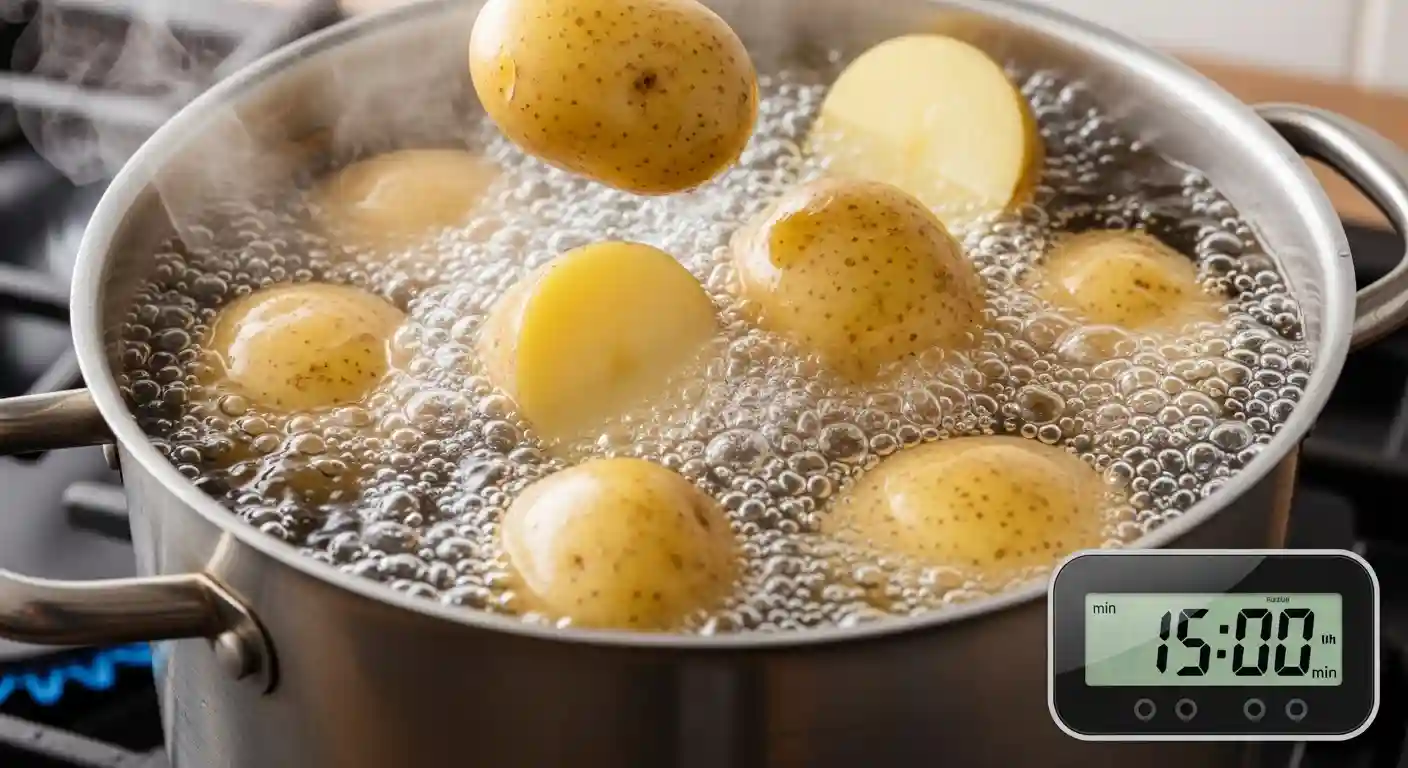

If you’ve ever stood over a pot of water wondering how long do potatoes boil, you’re definitely not alone. It’s one of those kitchen questions that seems simple but actually depends on a few key factors — the size, the type, and what you’re planning to make with them. Get it wrong and you end up with either crunchy, undercooked chunks or a mushy, waterlogged mess. Neither is great.
The good news? Once you understand the basics, boiling potatoes becomes second nature.
How Long Do Potatoes Boil? The Simple Answer
The honest answer is: it depends. But here’s a general breakdown to get you started:
- Whole small potatoes (baby or new potatoes): 15–20 minutes
- Whole medium potatoes: 25–30 minutes
- Whole large potatoes: 30–40 minutes
- Cubed potatoes (1-inch pieces): 10–15 minutes
- Diced small pieces: 8–10 minutes
- Halved potatoes: 20–25 minutes
The clock starts once the water reaches a rolling boil — not when you drop the potatoes in.
Does the Type of Potato Matter?
Absolutely. Different potato varieties have different starch levels, and that affects both texture and cook time.
Starchy Potatoes (Russets, Idaho)
These cook faster and tend to fall apart more easily. They’re perfect for mashed potatoes. Expect them to be done in 20–25 minutes when cubed.
Waxy Potatoes (Red, Fingerling, New Potatoes)
Waxy potatoes hold their shape better after boiling. They take a little longer — around 20–30 minutes whole — but they won’t turn to mush in your potato salad.
All-Purpose Potatoes (Yukon Gold)
These sit right in the middle. They’re versatile and cook evenly, usually taking 15–20 minutes when cubed.
Step-by-Step: How to Boil Potatoes Properly
Getting the timing right is only half the battle. Here’s how to boil potatoes the right way, from start to finish.
1. Prep Your Potatoes
Wash them thoroughly. Peel if needed, or leave the skin on for extra nutrients and texture. Cut them into even pieces — this is key. Uneven cuts mean some pieces overcook while others stay hard.
2. Start With Cold Water (Not Boiling)
Place your potatoes in a pot and cover them with cold water. Starting in cold water helps them cook evenly from the inside out. If you drop them into already-boiling water, the outside cooks faster than the inside.
3. Salt the Water Generously
Don’t skip this step. Salted water seasons the potatoes from the inside while they cook. Use about 1 teaspoon of salt per quart of water.
4. Bring to a Boil, Then Reduce Heat
Bring the water to a full boil over high heat, then reduce to a steady simmer. Hard boiling can break up delicate potato pieces.
5. Test With a Fork
Start checking around the minimum cook time. Stab a piece with a fork — it should slide in easily with no resistance. If it feels firm or crunchy in the center, give it a few more minutes.
Pedro Vaz Paulo Real Estate Investment Guide 2024
Practical Example: Boiling Potatoes for Mashed Potatoes
Say you’re making mashed potatoes for four people. You grab four medium Russet potatoes, peel them, and cut them into 1.5-inch chunks.
Here’s what you do:
- Place the chunks in a pot and cover with cold, salted water.
- Bring to a boil over high heat — about 10 minutes.
- Reduce to a simmer and cook for another 15 minutes.
- Test at 12 minutes with a fork. If they’re tender, drain immediately.
- Don’t let them sit in hot water after they’re done — they’ll keep absorbing moisture and get watery.
Total time from cold water to done: roughly 22–25 minutes.
Pros and Cons of Boiling Potatoes
Pros
- Quick and easy — no special equipment needed
- Works well for mashing, salads, soups, and side dishes
- Retains more moisture than roasting
- Gentle on delicate varieties like new potatoes
Cons
- Can get mushy fast if overcooked
- Water-soluble nutrients (like vitamin C and potassium) leach into the cooking water
- Boiled potatoes don’t have the crispy texture that roasting gives
- Easy to under or over-season without tasting as you go
Common Mistakes People Make When Boiling Potatoes
Even seasoned home cooks get this wrong sometimes. Watch out for these:
Cutting pieces unevenly. This is probably the number one mistake. When your pieces are different sizes, some will be perfectly cooked and others will still be hard. Always aim for uniform cuts.
Skipping the salt. Unsalted water gives you bland potatoes — no matter how much butter or seasoning you add afterward, you can’t fully recover from this.
Starting in boiling water. Dropping potatoes into already-boiling water causes the outside to cook too quickly while the center stays raw. Cold water start gives even results.
Not draining immediately. Leaving potatoes sitting in hot water after they’re cooked continues the cooking process. Drain right away and let them steam dry for a minute.
Overcrowding the pot. If your pot is too small, the water temperature drops too much when you add the potatoes. Use a pot that gives them plenty of room.
Best Practices for Perfectly Boiled Potatoes
Follow these and you’ll rarely go wrong:
- Always cut to uniform size. Aim for pieces that are roughly the same thickness and width.
- Use enough water. Potatoes should be fully submerged with at least an inch of water above them.
- Don’t boil at full blast the whole time. Bring to a boil, then simmer. Aggressive boiling breaks apart waxy potatoes prematurely.
- Test early, test often. Start checking a few minutes before the recommended time. A fork is your best tool here.
- Use the cooking water. The starchy, salty water left over is liquid gold for soups, gravies, or even bread dough.
- Match the potato to the dish. Waxy potatoes for salads, starchy potatoes for mashing, all-purpose for everything in between.
Conclusion
Boiling potatoes is one of those foundational cooking skills that pays off every time you get it right. The answer to how long do potatoes boil comes down to size, variety, and what you’re making — but now you’ve got a solid reference for all of those scenarios.
Start in cold salted water, cut evenly, test with a fork, and drain the moment they’re done. That’s really it. Master those basics and you’ll have perfectly cooked potatoes whether you’re making a creamy mash, a summer potato salad, or a hearty soup.
Frequently Asked Questions
1. How long do potatoes boil for mashed potatoes?
Cut into 1–2 inch chunks, starchy potatoes like Russets typically take 15–20 minutes to become tender enough for mashing. Test with a fork — they should break apart easily.
2. Should I boil potatoes with the skin on or off?
Either works. Leaving the skin on can help the potato hold its shape better and retains more nutrients. For mashed potatoes, peeling before boiling is generally easier.
3. How do I know when boiled potatoes are done?
Insert a fork or thin knife into the center of the largest piece. If it slides in with no resistance, they’re ready. If you feel any firmness, continue boiling and check every 2 minutes.
4. Can you over-boil potatoes?
Yes. Overcooked potatoes absorb too much water, become waterlogged and mushy, and lose flavor. They also fall apart, which is a problem if you need them to hold their shape for a salad or side dish.
5. Does water temperature affect how long potatoes take to boil?
Yes. Starting potatoes in cold water and bringing them up gradually results in more even cooking. It also means the actual boiling time begins once the water reaches a full boil, not when you put the potatoes in.
