
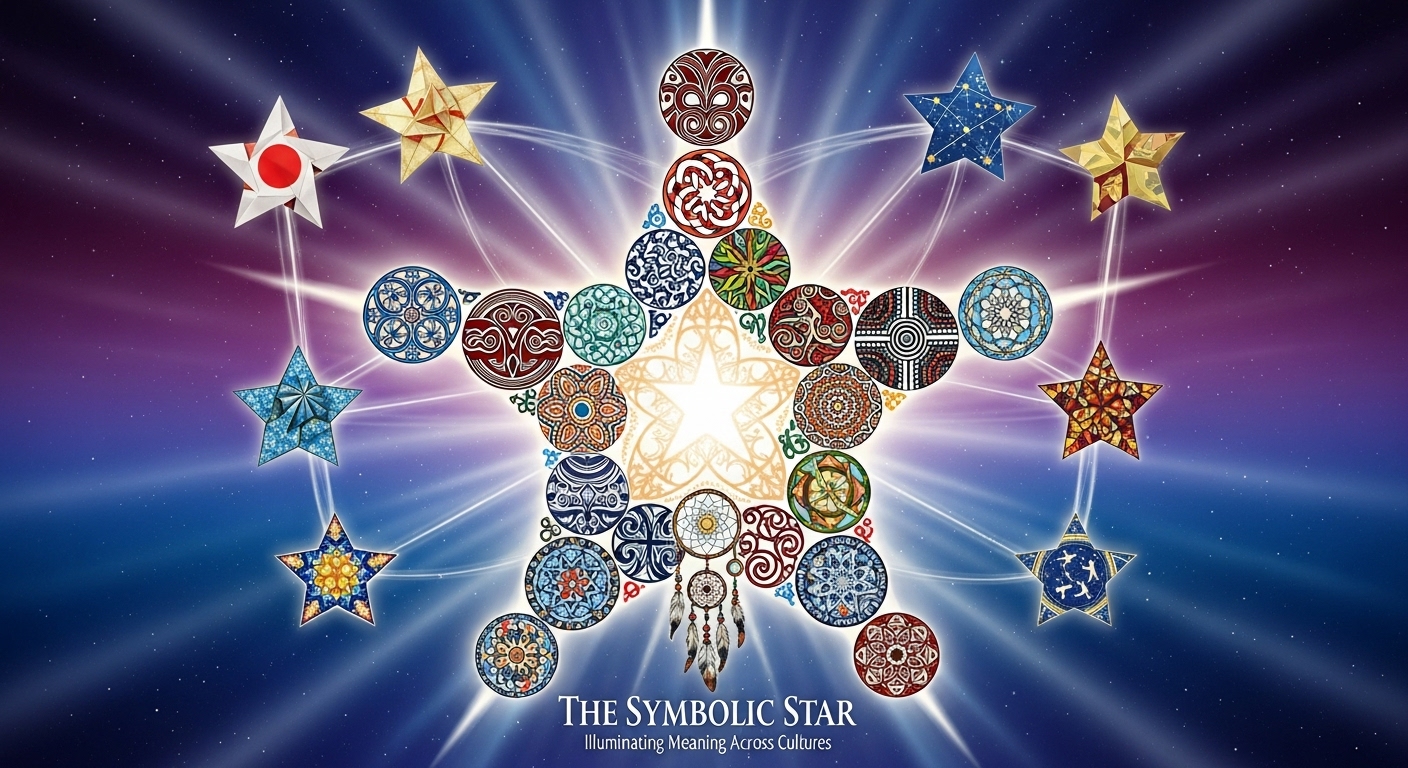

Stars have long captured our imagination, shining brightly in the night sky and inviting us to look beyond the ordinary. But these celestial bodies do more than twinkle; they carry deep symbolic meanings across cultures and time periods. From ancient civilizations to modern interpretations, the star has served as a guide, a protector, and an emblem of hope.
As we explore the rich tapestry of beliefs surrounding this enchanting symbol, we’ll uncover how different religions embrace its significance. We’ll also delve into ancient societies that revered stars for their wisdom and guidance. Moreover, we’ll discuss contemporary views on star symbolism while addressing some controversies that have arisen along the way.
Whether you’re drawn to its spiritual essence or simply captivated by its beauty, understanding the layers behind the symbolic star can deepen your appreciation for this timeless icon. Join us on a journey through history and culture as we illuminate what the star truly represents around our world today!
The Star in Religion and Spirituality
The star holds profound significance across various religions and spiritual beliefs. In Christianity, the Star of Bethlehem guides the Wise Men to Jesus’ birthplace, symbolizing divine guidance and hope.
Judaism reveres the Star of David as a powerful emblem of identity and faith. It represents unity and the connection between God and humanity through its six points.
In Islam, stars are often seen in art and architecture. They symbolize divine light. The crescent moon paired with stars reflects guidance on life’s journey.
Each culture imbues the star with layers of meaning, blending spirituality with tradition. These interpretations foster a sense of belonging among followers, linking them to their past while inspiring future generations.
Stars remind us that we share a common quest for understanding in our spiritual journeys.
A. Christianity
In Christianity, the star holds profound symbolism. The most notable reference is the Star of Bethlehem, which guided the Wise Men to Jesus’ birthplace. This celestial body represents divine guidance and hope.
The star signifies light piercing through darkness. It embodies faith and spiritual enlightenment for believers seeking truth in their lives.
Many churches incorporate stars into their designs, symbolizing heavenly connection. Stars often appear in nativity scenes during Christmas celebrations, reminding followers of Christ’s miraculous birth.
Additionally, some Christian traditions view the five-pointed star as a representation of human experience—spiritually reaching towards heaven while grounded on Earth.
Through these varying interpretations, the symbolic star remains a powerful emblem within Christianity, illuminating paths for countless devotees around the world.
B. Judaism
In Judaism, the star holds profound significance, often represented by the Star of David. This hexagram has become a symbol of Jewish identity and heritage.
The six points of the star are interpreted in various ways. Some see them as representing God’s rule over the universe in all directions—up, down, and across. Others view it as a reminder of unity among diverse aspects of life.
During religious ceremonies and festivals, this emblem appears on synagogues and ceremonial objects. It serves as a powerful visual representation of faith, history, and community.
Moreover, its presence on Israel’s flag symbolizes national pride for Jews around the world. The Star of David unites people through shared beliefs while reminding them to honor their rich past.
C. Islam
In Islam, the star holds profound significance. It is often associated with guidance and divine light. The most recognizable symbol—a crescent moon paired with a star—has become synonymous with Islamic identity.
Historically, stars are seen as markers of direction. Just as the stars guided ancient travelers, they symbolize Allah’s omnipresence in guiding humanity through life’s uncertainties.
Furthermore, the five-pointed star features prominently in various cultures influenced by Islam. Its presence can be found adorning mosques and Islamic art, reflecting beauty and spirituality.
Stars also represent hope and faith for many Muslims around the world. They remind followers of God’s promises and serve as a source of inspiration during challenging times.
The Star in Ancient Civilizations
Stars have long captivated the imagination of ancient civilizations. In Egypt, the star Sirius was linked to the goddess Isis, heralding the annual flooding of the Nile. Its appearance marked a time of renewal and agricultural abundance.
Meanwhile, in Greece, stars were integral to mythology. The Greeks named constellations after their deities and heroes, weaving stories into the night sky that guided sailors on treacherous seas.
Native American cultures also revered stars as vital cosmic symbols. Many tribes viewed constellations as ancestral spirits or navigational aids during journeys across vast landscapes.
These celestial bodies served not only practical purposes but also fostered spiritual connections with nature and life cycles. Their luminous presence inspired art, storytelling, and rituals that echoed through generations.
A. Egypt
The star symbol held significant meaning in ancient Egyptian culture. The Egyptians viewed the stars as divine beings, closely connected to their gods and goddesses. Among them, the most revered was the star Sirius.
Sirius marked the annual flooding of the Nile River, a crucial event for agriculture. Its rising signaled new beginnings and fertility. This celestial body was associated with Isis, a major goddess of motherhood and magic.
In tombs and temples, stars adorned ceilings to represent the afterlife journey. They believed that aligning oneself with these cosmic lights could ensure safe passage into eternity.
The importance of stars also extended to navigation. Ancient Egyptians used stellar constellations for guidance during their journeys across vast deserts or seas. In every aspect of life—spirituality, agriculture, exploration—the symbolic star played an integral role in shaping their worldview.
B. Greece
In ancient Greece, the star symbol held significant meaning in various aspects of life and belief. The Greeks associated stars with their pantheon of gods and goddesses. They believed that celestial bodies influenced human affairs, guiding sailors across treacherous waters.
The five-pointed star, or pentagram, emerged as a powerful emblem in mystical contexts. It represented the elements—earth, air, fire, water—and symbolized harmony among them. Philosophers like Pythagoras revered this shape for its mathematical properties and spiritual connections.
Stars were also central to Greek mythology. Constellations often depicted stories of heroes and deities etched into the night sky. These celestial images served not only as navigational aids but as moral lessons steeped in adventure and courage.
Even today, echoes of these beliefs persist through art and literature inspired by Greek symbolism. Each star continues to evoke curiosity about our place in the cosmos while connecting us to an ancient legacy rich with meaning.
C. Native American cultures
In Native American cultures, the star symbol carries profound significance and is often intertwined with mythology and spirituality. Many tribes view stars as ancestors watching over them, guiding their paths through life.
The evening sky serves as a canvas for storytelling. Constellations represent animals or heroic figures from tribal lore. These stories are passed down through generations, enriching cultural heritage.
Stars also play a role in navigation. Indigenous peoples use celestial bodies to find their way across vast landscapes, connecting earth with the cosmos.
Moreover, ceremonies often incorporate star motifs. Rituals celebrating seasonal changes focus on celestial alignments, reinforcing harmony between nature and human existence.
Each tribe has its unique interpretation of stars, reflecting diverse worldviews and beliefs within Native American cultures. This deep connection highlights not only reverence for nature but also an appreciation for the mysteries of the universe.
Modern Day Interpretations of the Star Symbol
In today’s world, the symbolic star has taken on new meanings. From fashion to art, its presence is ubiquitous. Designers often incorporate star motifs in clothing and accessories, allowing individuals to express their personalities.
Social media platforms have embraced this symbol too. Stars frequently appear in posts as a representation of aspiration and achievement. They serve as reminders for many that reaching for one’s dreams is always within grasp.
The rise of spirituality has also brought fresh interpretations. Many people associate the star with guidance and enlightenment. It symbolizes hope during challenging times, providing comfort through its celestial nature.
Additionally, stars are now used in wellness practices like meditation and yoga. Practitioners use them as focal points to enhance mindfulness and connect with higher energies. The versatility of the symbolic star continues to inspire creativity across various fields today.
Controversy and Misinterpretations of the Star Symbol
The star symbol has long been a beacon of meaning, yet its interpretations can spark heated debates. For some, it represents hope and guidance, while others see it as a signifier of oppression or conflict.
Various groups have adopted the star for their own narratives. This appropriation often leads to misunderstandings about its original significance. The pentagram, for example, evokes both mystical beliefs and associations with witchcraft. Such dual meanings create friction among cultures.
Moreover, media portrayals can distort perceptions further. A simple image may evoke admiration in one context but incite fear in another. This complexity shows how deeply embedded symbols are woven into our societal fabric.
Discussions surrounding the star also reveal historical grievances tied to identity and power dynamics. As people navigate these layers of meaning, they challenge each other’s perspectives on what the symbolic star truly represents.
How to Incorporate the Star Symbol into Your Life
Incorporating the symbolic star into your life can be a meaningful journey. Start by wearing jewelry that features stars. A simple pendant or earrings can express personal beliefs.
Consider decorating your space with star motifs. Wall art, throw pillows, or even starlit night lamps create an inviting atmosphere filled with inspiration.
Journaling about what the star symbolizes to you can deepen its significance. Reflect on themes of guidance and hope as you write.
Engaging in creative activities like drawing or painting stars allows for self-expression. Let your imagination run wild; there are no limits.
If you’re spiritually inclined, meditate on the image of a star to foster clarity and peace within yourself. Visualize it guiding you through challenges.
Share this symbol with loved ones during gatherings or celebrations. It’s a great way to connect over shared meanings and values associated with the star.
Conclusion:
The symbolic star has woven its way through the fabric of human culture across epochs and geographies. From ancient civilizations to modern interpretations, it serves as a beacon of hope, guidance, and spiritual significance. Each culture imbues this simple shape with rich narratives that tell stories of faith, unity, and cosmic connection.
By understanding its varied meanings—from the guiding star in Christianity to the Star of David in Judaism or the crescent symbol in Islam—one can appreciate how deeply rooted this symbol is in our collective consciousness. Ancient Egyptians revered stars as divine entities; Greeks associated them with mythology; Native Americans saw them as ancestral spirits watching over us.
Even today, people adopt the symbolic star for personal expression. Whether it’s through jewelry or artwork, it continues to inspire creativity and introspection. However, caution must be exercised against misinterpretations that can lead to controversy or cultural appropriation.
Incorporating the star into your life can be meaningful whether you wear it as an amulet for protection or simply admire its beauty in art forms around you. The versatility and richness of meaning behind this enduring symbol remind us that we’re all connected under one vast sky filled with shimmering stars waiting to guide us on our journeys.
